
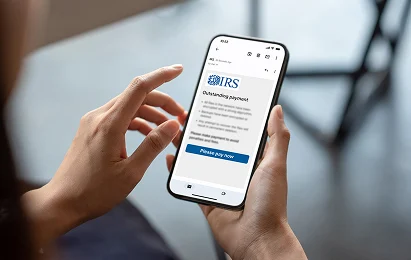
Messages look official and try to trigger fear or excitement using phrases such as "urgent issue," "final notice," "refund available," or "verify your identity." They push you to click a link, open a document, scan a QR code, or call a number that routes to a fake account.
If successful, a criminal will then capture your login details and use your information to file a fraudulent return, install harmful software on your devices to gain further access, or exploit other members of your family and social network.
In 2024, the FBI's Internet Crime Complaint Center (IC3) received nearly 860,000 complaints, with phishing and spoofing among the most reported crime types.
Red flags to watch for
- Links or attachments claiming to be IRS forms or "secure messages"
- Requests for payment by gift card, wire, or crypto
- Threats of arrest or immediate enforcement action
- Any demand to "verify" Social Security numbers, bank details, or account passwords via message
How BlackCloak helps
BlackCloak provides practical ways to stop tax-themed phishing. We help you strengthen your email and key accounts with two-step sign-in and password best practices, and we continuously scan the dark web for exposed passwords tied to your email addresses. Every device is also covered with comprehensive antimalware and enterprise-grade antivirus software.
If a suspicious IRS-looking message arrives, you can verify the identity of the sender via our Identity Verification feature, or send it to our Concierge Team for a clear, fast judgment call. If you do click or open a fake email, our incident response team can help contain the problem quickly.
